
What exactly is Jewish food?
There are stereotypical staples that come to mind when thinking of specific examples, especially for those who are living in close-knit communities in Western countries. Think New York, think lox on bagel, or salt beef on sourdough rye. Lunchtimes at establishments such as Zabar’s are almost theatrical with personalities such as Len Berk, reportedly the oldest salmon cutter in New York, contributing to the notion that food is folklore in the Jewish world.
Think London, think chopped liver, cholent and kugel. Or do you?
These days, London’s Jewish community is diverse, multilingual and spans the entire 33 boroughs. No longer is it confined to enclaves in the north and north west who are unified in their dining habits. Westernized versions of shtetl food are still popular, but branching away from Golders Green Road, Brent Street and Stamford Hill, there is a huge appetite for more.
Over recent years, Jewish life in London has experienced a boom, with Sefardim from France having moved in significant numbers to South Kensington, most of whom are shomer kashrut. Jewish people from across the former Soviet Union have moved to Greenwich, Richmond, Chelsea, Clapham, St John’s Wood, parts of the Isle of Dogs. Members of the higher social classes in Israel now populate Notting Hill, Fulham, Chiswick, Hampstead and Highgate.
Who’d have thought that Hebrew would be a familiar sound in the fashion boutiques of Kings Road?
With this wave of modernity and regeneration comes a demand for varied food options. I have noticed that through working in the food industry myself, residents of Belgravia, Marylebone and Mayfair want to enjoy European delights, but with Kosher ingredients. Some homes have professional chefs working for the families, and speciality dishes such as halibut thermidor with seasonal vegetables followed by an array of desserts is not uncommon. An emulation of London’s finest restaurants, but private and kosher.
There are even small businesses such as Central Kosher in Belgravia run by the erudite and enthusiastic Mendy Ida, going to the extent of importing products from France, mostly specialist meat from the Buchanger company (supervised by the Strasbourg Rabbinut). Not an easy task given the complex bureaucracy of importing food products post-Brexit.
Back To Black….
Perhaps the most interesting development is that kosher retailers in the traditional heartlands of Golders Green are now beginning to adapt to the new audiences.
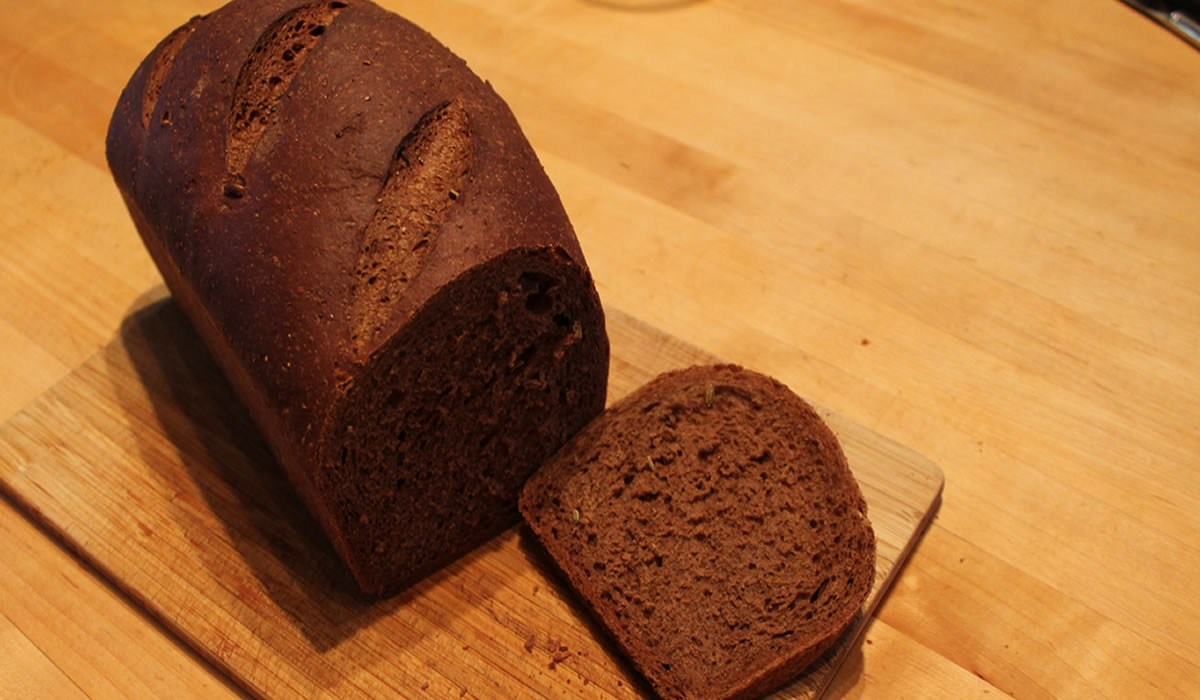
Yes, Kosher Kingdom has always stocked a huge array of Israeli products, so the roaming Tzabar can feel at home (as I sit here with my glass of Spring Mango), however particularly noticeable is the appearance of black rye bread at certain bakeries.
Daniel’s Bakery in Temple Fortune NW11 is a case in point. Those who have lived in Europe or North America most of their lives may not have ever seen jet black loaves of bread or bread rolls.
However upon entering Daniel’s Bakery yesterday, a day before the ubiquitous line of customers goes out of the door and down the street on Fridays, there was a fantastic abundance of black rye bread and rolls.
For anyone who has come to London from Eastern Europe or Israel, this will likely be met with joy.
Black rye bread, or Borodinsky Chleb (бородинский хлеб) as it is known in the Russian language, has been a hit for generations across Jewish communities of the shtetls and cities alike in the former Russian Empire and later Soviet Union. After the disbanding of socialism, Borodinsky black rye bread became fashionable in Ukraine, Russia and Israel in the same way that sourdough rye became fashionable in California.
East Meets West.
It Is produced by using around 80% whole-grain rye flour with about 15% of a second-grade wheat flour and about 5% of rye, or in some cases barley malt, and then leavened by a separately prepared starter culture made like a choux pastry, by diluting the flour by a near-boiling water.
Yeast is then added after cooling the mix to just over 60°C, but then mostly inoculated by the previous batches of dough instead of the dry yeast.
It is then sweetened and colored with beet sugar molasses, and flavored with salt and spices, of which the coriander seed is required, and caraway is optional, but still quite popular, however in many cases, modern recipes are often 100% whole rye in a similar method to American rye bread.
In the early 1990s, shoppers across Israel began to see black rye bread appearing in supermarkets and bakeries. Berman, Israel’s largest and oldest bread producer, makes the most recognizable version.
The arrival of Borodinsky-style bread in kosher bakeries in London is a testimony to the diversity of today’s tastes, and for those looking for a taste of home. It also shows the adaptation of this recipe for barbecues this summer – you can get black rye bread rolls to put the grilled sausages in.
I took a bite, and it took me back 40 years….
Taam shel Paam, as they say.